

What if the floor you add for storage makes your loft less safe and your insulation less effective? It’s easy to assume the joists can take extra weight or to board straight over insulation, but both can cause problems. Knowing how to make loft safe for storage starts with checking the space before carrying anything up.
Before planning storage, look for visible damage, damp, exposed wiring and blocked ventilation. Consider how you’ll reach the loft, move items safely and keep the route clear. These checks can help you spot obvious hazards, but they can’t confirm how much weight your loft can support.
This guide explains what to look for in the structure, insulation and ventilation, and how flooring and access choices affect everyday use. The aim is to make better use of your loft without putting yourself, your belongings or your home at unnecessary risk.
Key Takeaways
- Learn how to make loft safe for storage by checking for visible damage, damp and other warning signs before bringing items up.
- Compare leaving the loft unboarded, adding limited access boarding or creating a raised storage floor to suit the space.
- Keep insulation clear of stored items and avoid blocking ventilation paths around the eaves.
- Plan safer trips into the loft with suitable access, good lighting and a clear route for moving belongings.
- Pause if you have concerns about the structure, wiring or damp. A visual check cannot confirm the loft’s condition or capacity.
How to Make a Loft Safe for Storage Before You Use It
You want useful storage space without damaging your home or risking a fall. Before carrying boxes upstairs, look at the loft as a whole. Safe storage depends on suitable support, insulation that stays effective, clear ventilation and a reliable way in and out. A boarded surface alone doesn’t prove that the structure can support the items you plan to store.
Lofts vary from house to house. The attic safety and storage overview gives useful background on how these spaces are used, but your own loft needs a practical check before use. Start at the hatch and look for visible hazards. Then consider the flooring, route through the space, and the weight and placement of the belongings you have in mind.
What makes a loft suitable for household storage?
An accessible loft is simply one you can reach. A planned storage area also needs a suitable floor, a clear route and access that lets you move items without losing your balance. Ceiling joists support the ceiling below, while insulation helps limit heat loss. Flooring should provide a usable surface without compressing insulation or obstructing airflow. Capacity varies by property, so there’s no universal safe load to rely on.
Think about what you’ll store. A few light items used occasionally place different demands on the space from heavy boxes spread across a large area. Don’t assume existing boards, or the fact that someone has walked in the loft before, prove it’s suitable for your plans.
Which loft hazards should you notice first?
Begin at the hatch and inspect what you can see without stepping onto unsupported areas. Look for damaged or unstable-looking timbers, signs of damp, exposed wiring, disturbed insulation and vents that appear blocked. Check for uncovered openings and loose items that could cause a trip. Don’t move wiring or disturb anything you’re unsure about.
If you spot concerning damage, stop before storing items and arrange a competent assessment. A visual check can flag warning signs, but it can’t confirm the loft’s structural capacity. Once you’ve considered any obvious hazards, look at how flooring can protect the insulation and how access can be made safer.
Check the Loft Structure, Insulation and Ventilation Before Storing Items
Before deciding how to make loft safe for storage, carry out a calm visual check from the hatch. Use a torch to look across the space first. Don’t step onto ceiling plasterboard or move beyond a secure surface you know is supported. If you can’t inspect an area safely, leave it alone rather than reaching or walking across the loft.
Check the structure, moisture, insulation and ventilation before bringing belongings into the loft. These checks are a useful starting point, but they don’t confirm how much weight your particular loft can carry. Joist size, condition and layout vary between properties. A general load figure or an assumption based on a neighbouring house isn’t a substitute for a property-specific assessment.
How can you spot warning signs in the loft?
Look for timbers that appear cracked, sagging or out of place, along with water staining, damp patches, mould-like marks, pest activity or loose debris. Notice whether insulation looks disturbed and whether there are exposed cables or uncovered openings. These are observations, not a diagnosis. A visual check can help you spot something that needs attention, but it can’t establish the cause or confirm structural safety.
Don’t move suspect structural members, pull at wiring or disturb materials you think may be hazardous. If anything looks concerning, stop and arrange an assessment by someone competent to examine it. Keep people out of the affected area in the meantime.
How do insulation and ventilation affect safe storage?
Insulation works by trapping air within its material. Pressing it down beneath boards or boxes can reduce its intended performance. Flooring raised above the insulation can create space for storage, but the right arrangement depends on the loft. Keep stored items clear of ventilation routes, particularly around the eaves, so airflow isn’t obstructed.
For more detail on planning a floor above deeper insulation, see our guide to boarding over 270mm insulation. The expert guide to loft boarding also discusses insulation, ventilation and structural considerations. Treat general guidance as a starting point, not proof that a specific loft is suitable. Check current standards and structural capacity against the property and the work being planned.
If you’re planning raised flooring, access or insulation improvements, explore raised loft storage options.
Choose a Loft Flooring Approach That Protects Insulation
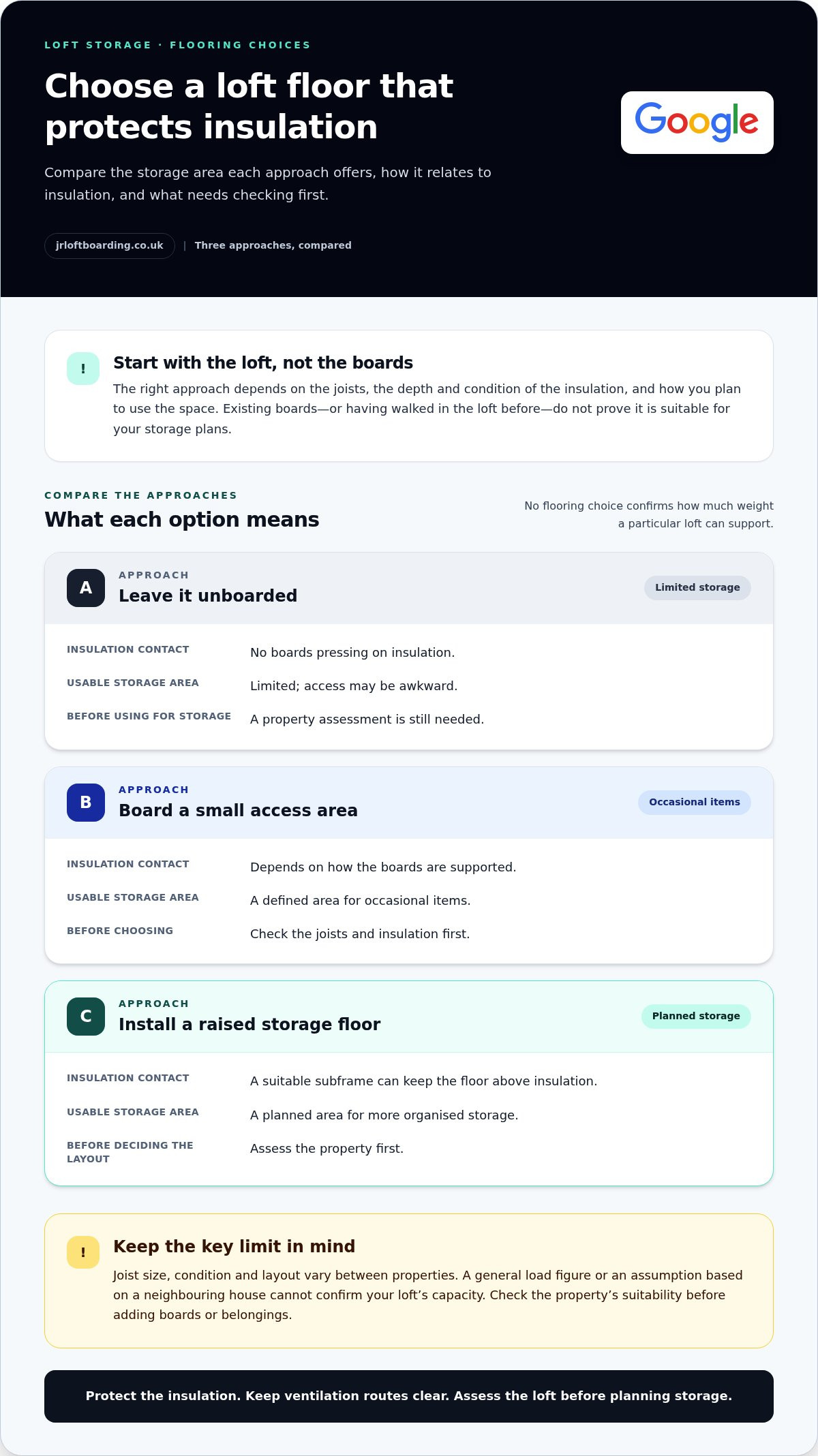
The best flooring choice depends on the joists, the depth and condition of the insulation, and how you plan to use the loft. A clear area for occasional access needs a different approach from a planned storage floor. None of these options proves the loft can support a particular load, so assess the property’s suitability before adding boards or belongings.
| Approach | Insulation contact | Usable storage area | Property assessment |
|---|---|---|---|
| Leave it unboarded | No boards pressing on insulation | Limited; access may be awkward | Still needed before using the loft for storage |
| Board a small access area | Depends on how the boards are supported | A defined area for occasional items | Check the joists and insulation first |
| Install a raised storage floor | A suitable subframe can keep the floor above insulation | A planned area for more organised storage | Assess the property before deciding the layout |
When is raised loft flooring worth considering?
Raised flooring may suit a loft where you want a more usable storage area while keeping the boards separate from the insulation. A suitable subframe creates space beneath the floor. It doesn’t mean the loft has unlimited capacity or that every area is suitable for heavy items. The existing joists, insulation and intended use still matter. For a fuller technical comparison, look for a guide to raised and standard loft boarding.
What should you avoid when planning loft boards?
Don’t press boards down onto insulation or remove insulation simply to make room. If the floor needs to sit at a different height, consider an arrangement that preserves space for insulation and keeps ventilation routes clear. The right detail depends on the loft.
Never cut, alter or remove roof trusses to make storage space. They form part of the roof structure, and changes need proper assessment. The UK Building Regulations (Approved Documents) provide official guidance on building standards, but general information can’t confirm the right solution for an individual property. Careful planning is part of how to make loft safe for storage, alongside checking the structure and choosing boards that suit the space.
Plan Safe Loft Access, Lighting and Storage Habits
A clear route and a steady way into the loft make storage easier to manage. Before each visit, check that the hatch area is free of obstacles. If the ladder feels unstable or the opening is difficult to use, don’t try to compensate by balancing or stretching with items in your hands.
How can you get into and move around the loft more safely?
A ladder should be stable, correctly fitted for the hatch and suitable for the space. Handholds can help you keep your balance as you climb. A fitted ladder and suitable hatch make access more straightforward, while good lighting helps you see the route and spot anything in your way. Don’t rely on a phone torch if using it means you can’t keep a hand free.
Use this simple routine each time:
- Clear the area below the hatch. Move furniture and loose items so you can open it without obstruction.
- Set up the ladder and light. Check that the ladder is steady and the loft route is visible before climbing.
- Climb with your hands free. Don’t carry bulky boxes or anything that prevents a firm grip. Pass items up only when you can do so without overreaching or losing balance.
- Keep the route clear. Place items to one side as you go, and leave the hatch opening unobstructed when entering or leaving.
Only move around on surfaces known to be suitable for walking. Don’t step onto exposed ceiling plasterboard or use stored boxes as makeshift steps.
How should you organise items once the loft is ready?
Group belongings in stable containers and keep heavier items low and within easy reach. Put lighter, regularly used things where you can access them without shifting a tall stack. Leave a clear route between the hatch and stored belongings, and don’t pile items where they could topple onto someone below.
Keep boxes clear of lights, wiring and ventilation routes. Don’t cover vents or use storage to conceal areas that may need checking. A protective balustrade around an access opening can also help reduce the risk of a fall, where appropriate to the layout.
Check the loft periodically for signs of damp, movement or newly blocked airflow. If the ladder, hatch or lighting needs improving, plan safer loft access as part of your storage setup.
When to Arrange Professional Loft Storage Work in Glasgow and Nearby
If you’ve spotted cracked or sagging joists, signs of damp, exposed wiring or concerns about the roof structure, pause your storage plans. Don’t cover warning signs with boards or try to alter the structure yourself. An assessment can help establish what needs attention before flooring or belongings are added. It’s a sensible step if you can’t tell whether the loft suits the storage you have in mind.
When planning storage work, consider the whole setup, not just the floor. Raised flooring, suitable access, a usable hatch and good lighting can work together to make the loft easier to reach and organise. The right combination depends on the layout and how you intend to use the space.
What can a tailored loft storage installation address?
Raised flooring uses a suitable subframe to keep the boards above the insulation rather than pressing it down. A fitted loft ladder and improved hatch can make access more practical. Lighting can help you see the route, while accessories such as shelving or a protective balustrade may suit some layouts. Each element should have a clear purpose and fit the space. Flooring and access improvements don’t, by themselves, confirm how much weight the loft can safely support.
What is a sensible next step for homeowners?
Before planning the work, note what you can see from the hatch, any access difficulties and the belongings you hope to store. Include concerns such as damp, wiring or damaged-looking timbers. This gives you a useful starting point for discussing a layout and suitable work for your home.
JR Loft Boarding is a family-run business operated by John, serving Glasgow and nearby communities including Airdrie, Motherwell, Paisley, Hamilton, Bishopbriggs, Newton Mearns, East Kilbride and Cambuslang. Its loft storage work can bring raised flooring, access, insulation and practical accessories together to suit the property. If you’re ready to explore how to make loft safe for storage, discuss your loft storage options.
Make Your Loft Storage Safer, Step by Step
A useful loft storage area starts with checking the space, not simply covering it with boards. Look for visible concerns, protect insulation and ventilation, and choose flooring and access to suit your home. Keep belongings organised, and don’t assume a boarded floor can support any load.
Raised loft flooring can create storage space above insulation, while suitable ladders, hatches, insulation and accessories can make the area more practical to use. JR Loft Boarding supplies and installs raised flooring, Easystow loft ladders, hatches, insulation and storage accessories. The right setup depends on your property and its layout. If you’re still wondering how to make loft safe for storage, start by checking the space and planning a setup around its needs.
JR Loft Boarding serves Glasgow and nearby communities. Discuss a safer, more usable loft storage space and take the next step towards a loft that’s easier to access and keep in order.
Frequently Asked Questions
Can I store things in my loft without boarding it?
Possibly, but only if there’s a suitable supported area for the items and you can reach it safely. Don’t place belongings on insulation or step onto ceiling plasterboard. Exposed joists aren’t automatically a suitable storage floor. If you’re unsure which areas can take belongings, leave the loft unused for storage until its layout and suitability have been assessed.
Is it safe to put loft boards directly over insulation?
Boards laid directly on insulation can squash it, reducing its intended performance. They may also obstruct ventilation routes if they cover the eaves. A raised subframe can create space for a floor above the insulation, provided the arrangement suits the property and keeps airflow clear. Don’t remove or compress insulation simply to fit boards without considering the effects.
How do I know whether my loft can support storage?
You can’t confirm storage capacity from a quick look or from the presence of existing boards. It varies by property and depends on factors such as the joists, their condition and layout, and the weight and spread of the items. Look for visible warning signs, but don’t treat them as a structural diagnosis. If capacity is uncertain, arrange a property-specific assessment before using the loft for storage.
Can I walk on the joists in my loft?
Don’t assume joists are safe to walk on. They can be narrow and awkward to balance on, and may not be suitable for foot traffic. Stepping between them can damage the ceiling below or cause a fall. Don’t walk on plasterboard. Only move around on a surface known to be properly supported for access, and stop if you can’t identify a safe route.
What should I avoid storing in a loft?
Avoid putting heavy items in the loft until its capacity has been assessed. Don’t store flammable liquids, fuel or other hazardous materials unless their instructions and safe storage requirements allow it. Heat and damp can also damage sensitive belongings, so a loft may not suit photographs, delicate fabrics or items that need stable conditions. Keep belongings away from lights, wiring, vents and access routes.
Do I need a loft ladder to use loft storage safely?
A loft ladder isn’t the only possible access arrangement, but you need a stable, suitable way to get in and out. Don’t climb on furniture or carry bulky items that stop you keeping a firm grip. A properly fitted ladder can make regular access more manageable. JR Loft Boarding supplies and fits Easystow loft ladders in Glasgow and nearby areas, including Airdrie and Paisley.
Can loft boarding block ventilation or damage insulation?
Yes. Boards laid directly on insulation can compress it, and flooring or stored belongings can obstruct ventilation routes, particularly around the eaves. A raised floor can help keep boards above insulation, but its design and position need to suit the loft. Keep vents clear and check periodically for damp or blocked airflow. If you’re unsure how the boards affect insulation or ventilation, pause before storing items.

