

Extra storage often starts with owning less, not building more. To work out how to get more storage in my house, declutter first, then make better use of overlooked spaces, including a suitable loft, for belongings you want to keep.
Cupboards and rooms can quickly feel full when everyday items have nowhere handy to go. Clearing out things you no longer need can free space straight away, while using overlooked areas gives the belongings you keep a more organised home.
Two practical ways to create more room are sorting what you own and making better use of storage space around the house. Loft storage can also help with items you don’t use every day. Before storing belongings there, consider what you’ll keep, how you’ll access it and whether the space is suitable.
Key Takeaways
- Start by sorting belongings you no longer need, then give the things you keep a clear, convenient home.
- Look beyond cupboards: overlooked areas such as under-stair spaces, doors and beds can make useful storage spots.
- Loft storage can free up living space for items you use less often. Safe access and suitable flooring help make it practical.
- Built-in seating and shelving can add storage while making better use of awkward or unused areas.
- Heavy items can put strain on unsuitable storage areas, so consider the floor and how weight is spread before storing them in a loft or garage.
1. Decluttering and making use of unused space
Sort belongings before adding shelves, boxes or furniture. Pick one area, such as a bedroom drawer, and separate items you use from things you no longer need. Removing unwanted belongings can free space without changing the room, and makes it easier to see which storage problems remain.
Make a clear decision about each item: keep useful belongings, pass on items in good condition, and dispose of things that are broken or no longer needed. A drawer full of old cables, for example, may become practical space for everyday essentials once you’ve sorted its contents. Keep valuable items together somewhere you can find them again.
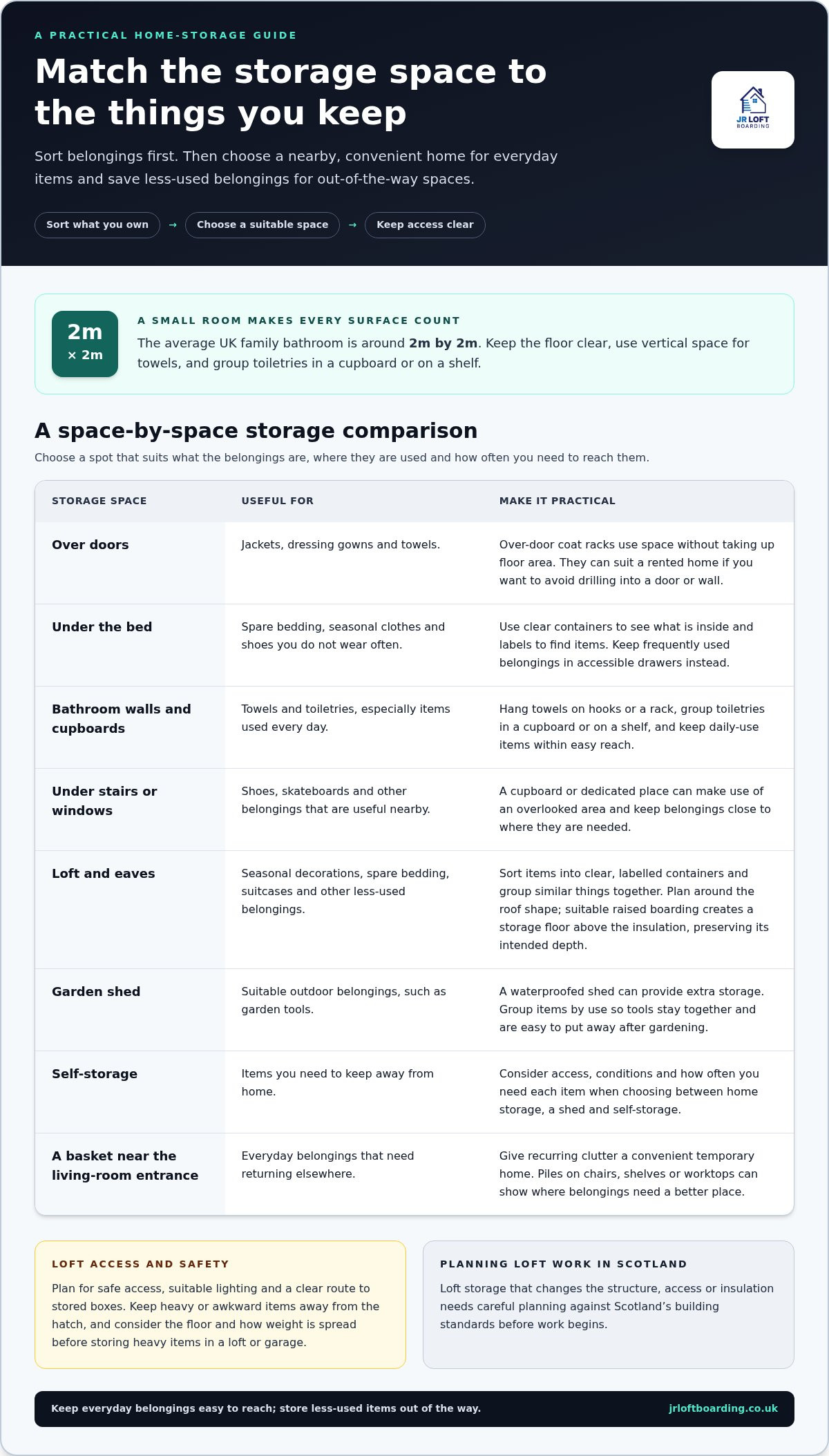
Next, make use of existing space. Over-door coat racks can hold jackets, dressing gowns or towels without taking up floor space. They can also suit a rented home if you’d rather avoid drilling into a door or wall.
In a small bathroom, keep the floor clear and use vertical space. The average UK family bathroom is around 2m by 2m, so even a bulky laundry basket can feel in the way. Hang towels on hooks or a rack, and group toiletries in a cupboard or on a shelf. Keep the items you use daily within easy reach.
Bedrooms often have overlooked storage beneath the bed. Use it for spare bedding, seasonal clothes or shoes you don’t wear often. Clear containers show what’s inside, while labels help you find things without pulling out every box. Keep frequently used items in accessible drawers instead.
Check whether an outbuilding or garden shed could take items currently stored indoors. A waterproofed shed can provide extra storage for suitable belongings, such as garden tools. Group items by use so tools stay together and are easy to put away after gardening.
A tidy room can become cluttered again within an hour if everyday belongings have no set place. Put a small basket near the living-room entrance for items that need returning elsewhere. Before adding more storage, notice what gathers on chairs, shelves and worktops. Those recurring piles show where a simple, convenient home for belongings could make the biggest difference.
Getting rid of belongings or furniture you no longer need is an effective way to make more room. Ask whether each piece serves a current purpose and whether it makes the room harder to use. If it no longer earns its place, consider passing it on or disposing of it instead of squeezing it into another corner. Avoid keeping something just because it might be useful someday. Decide based on how you use the room now.
Once you’ve cleared items, consider how you move through the space and where you spend time. Keep frequently used areas comfortable and easy to access, and avoid filling cleared surfaces straight away. If furniture still feels crowded, try moving a piece before buying anything. A different arrangement may make the room more useful without adding storage or belongings. When clutter returns, decide whether an item needs a better home or no longer belongs there.
2. Attic conversion and storage
A loft can hold belongings that don’t need to stay in everyday rooms, such as seasonal decorations, spare bedding and suitcases. Before moving anything upstairs, decide what needs regular access and what can be stored away. Keep frequently used belongings near the hatch or in a more accessible cupboard.
Start by looking at the eaves. These low spaces can be made more useful for storage with suitable boarding, improved access and lighting. Plan the layout around the roof’s shape rather than assuming the whole loft offers convenient standing or storage space. Raised loft boarding creates a storage floor above the insulation, preserving its intended depth.
Access matters as much as capacity. A narrow opening can make boxes awkward to lift, whilst poor lighting makes it harder to find a particular decoration. Sort items into clear, labelled containers before storing them. Group similar things together, such as seasonal decorations in one box and spare towels in another. This makes retrieval simpler and reduces unnecessary searching.
Consider what you need in the rooms below the loft, too. A kitchen may need space for equipment used throughout the week, while a bathroom needs easy access to towels and toiletries. The loft is better suited to less-used belongings. Keep heavy or awkward items away from the hatch and leave a clear route to stored boxes.
Choose between home storage, a shed and self-storage by considering access, conditions and how often you need each item. Use a loft or cupboard for belongings you want nearby, a shed for suitable outdoor equipment, and self-storage when items need to be kept away from home.
For cupboards and shelves in existing rooms, use suitable fixings and keep access clear. Loft storage that changes the structure, access or insulation needs careful planning against Scotland’s building standards before work begins.
A new build is a useful time to plan loft access and storage before rooms fill with belongings. Consider where seasonal boxes will go and how you’ll reach them. Early planning can help keep everyday living areas free for regular use.
For a new build, explore loft storage planning as part of deciding how the home will work.
Convenience can guide where belongings go, not just how much room is available. Garden chair cushions are inconvenient to store upstairs when garden access is below, so consider where an item is used before assigning it a place. The same principle can help when planning storage around the home: space beneath stairs and beneath windows can be converted into storage, including cupboards for shoes or a place to keep skateboards. These options can keep belongings near the areas where they are needed, rather than sending everything to the loft. Clearly labelled plastic bins can be stored in wood cubbies in closets, garages, attics or other enclosed spaces. Using bins and cubbies together gives stored items a defined place, while labels make it easier to identify what is inside. Keep the arrangement suited to the item and its usual point of use.
3. How to create more storage space in a small house
To work out how to get more storage in my house, start with spaces that already exist but aren’t being used well. The area beneath the stairs can hold shoes, coats or household supplies in fitted cupboards or shelving. Space beneath a window may suit a low cupboard or a place for skateboards. Measure awkward spaces first, then choose storage that leaves doors and walkways clear.
Keep storage close to where you use each item. Garden chair cushions are awkward to fetch from an upstairs cupboard when the garden is downstairs, so keep them near the garden entrance instead. A hall wardrobe can hold coats and shoes where people take them off. An organised storage room can also stop spare belongings spreading through the house.
In the kitchen, make cupboards easier to use before adding furniture. A Lazy Susan can bring items at the back within reach. Removable sticky hooks inside cupboard doors can hold saucepan lids or cloths. Hang bulky utensils and pans from hooks on a metal bar to free cupboard space and keep them near the cooker.
Use vertical space when floor area is limited. Floor-to-ceiling shelving can store books, boxes and everyday belongings without taking up more floor space. Bespoke shelves can fit narrow nooks and awkward corners. In a hall or small bedroom, hooks or hanging storage on the back of a door can keep the floor clear.
Reception rooms can serve more than one purpose. A chest of drawers can store table linen, games or toys, while its top holds a lamp or display. A window seat or storage ottoman can provide a place to sit and hold blankets. Choose furniture that suits the room’s daily use rather than filling a walkway with extra pieces.
If you’re still considering how to get more storage in my house, look at whether a hidden cupboard wall could suit your layout. Cupboards can be created by making another room smaller, with a depth of 50 centimetres. Consider which room can spare the area and what belongings need storing before choosing this approach.
For belongings kept for years rather than months, vacuum storage bags can reduce the space they take in a cupboard. Empty suitcases can hold items between trips. Label bags or boxes clearly to make seasonal belongings easier to find. Keep each category together, such as outgrown children’s clothes, so you can retrieve what you need without unpacking everything.
4. Best built-in storage ideas for UK homes
Built-in storage works best when it solves a clear problem in a particular room. Before choosing a design, note what needs storing and where it is used. A hallway may need a place for shoes and bags, while a kitchen might benefit from a seat that also stores rarely used items. A clear purpose helps storage fit everyday routines.
A window seat can make use of space that might otherwise stay empty. One example was built beneath a 6-foot-wide kitchen window, with bookcase storage included. A custom seat can be built in a couple of days using ready-made kitchen cabinets. This approach combines a place to sit with shelves for books, table linen or other household items.
Measure the window area and check how a seat will affect nearby furniture. Leave enough room to open cupboards and move chairs. In a kitchen, store items inside the seat that don’t need daily access. Books or small display objects can sit on open shelves, while less attractive household items stay behind cupboard fronts.
Built-in seating can also suit a hallway or living room. A bench with storage beneath can hold shoes near the front door or spare blankets beside a sofa. Match the contents to the location: shoes in a hall bench are easy to reach, while bedding beside the sofa is handy on a chilly evening.
Wall-to-wall lockers provide enclosed storage in garages, mudrooms, basements and playrooms. Use separate sections for different belongings, such as coats, sports equipment or children’s toys. Closed doors keep items out of sight, while shelves or hooks inside help organise each section. Keeping the floor clear also makes the room easier to use.
For an awkward alcove, fitted shelves can use the full recess without placing a freestanding unit across the room. Decide what each shelf will hold before setting its position. A lower shelf could take heavier boxes, while frequently used books or baskets stay within easy reach. Match shelf depth to the items so storage doesn’t project unnecessarily into the room.
Built-in storage should leave everyday routes clear. In a narrow hall, a deep cupboard can obstruct movement, so a shallow bench or fitted hooks may suit the space better. In a playroom, lockers can gather toys in one place, but accessible compartments make it easier for children to put things away. Match the design to the room, its contents and how people use it.
5. What are the risks of storing heavy items in a loft or garage?
Heavy belongings put pressure on the surface beneath them. In a loft, that pressure passes through the boarding to the joists and supporting structure. A concentrated stack of books or boxes places weight in one small area. Distribute belongings across suitable flooring rather than creating a heavily loaded spot.
Don’t assume every loft floor is suitable for storage. Ceiling joists may not be designed to carry the same loads as a living-room floor. Heavy items placed directly on ceiling plasterboard can damage it, and overloading a weak area can cause structural problems. Store goods on a suitable boarded area, not balanced between joists.
Access creates another risk. A large box of books or a heavy piece of furniture can be difficult to lift through a loft hatch or move safely on a ladder. Choose smaller containers you can handle steadily, and keep the route from the hatch clear. Avoid storing bulky items where they could fall or block access to other belongings.
Garages bring different concerns. A heavy box on a high shelf can be awkward to lift down and may fall if the shelf or its fixings cannot support it. Keep heavier belongings on low, stable shelving and place lighter items above them. Arrange boxes so they don’t obstruct the door, walking route or access to regularly used equipment.
Moisture can affect belongings in garages and lofts. Cardboard boxes may soften in damp conditions, and fabrics can pick up musty smells. Choose containers suited to the storage area and keep items away from visible damp patches. Avoid placing heavy containers directly against an external wall, where they can be harder to inspect and move.
Before storing a heavy item, consider its weight, shape and how often you’ll need it. A box of books needs a firm, accessible place; a suitcase used once a year can sit further back. Split dense belongings between smaller containers and distribute them instead of stacking them together. Keep fragile items apart from heavy boxes that could crush them.
For loft storage, suitable flooring gives belongings a stable surface and helps keep them clear of ceiling plasterboard. A clear access route and sensible placement make stored items easier to reach. Explore raised loft boarding to make your loft more practical for storage.
JR Loft Boarding: Raised loft boarding
JR Loft Boarding can make suitable loft space more practical with raised loft boarding. The raised floor creates useful storage above the insulation, preserving its intended depth. This can help when you’ve decluttered living spaces but still need somewhere for seasonal items, suitcases or decorations.
Consider this option if your loft lacks a suitable surface for storage, or if accessing stored items is difficult. Easystow loft ladders can provide loft access, while loft hatches and insulation can support a more usable loft setup. For new builds, planning storage early can help you make better use of the space from the start.
Contact JR Loft Boarding for a free quote for raised loft boarding in Glasgow and Central Scotland.
Make your next storage choice count
If you’re asking how to get more storage in my house, start by deciding which belongings need to stay close and which can move out of everyday rooms. That distinction can help you choose a useful next step instead of adding storage that doesn’t suit your routine.
Think about how you use your home over a normal week. Storage should make it easier to reach the things you keep, not simply hide them. If loft storage is part of your plan, consider how you’ll access it and what you intend to store there.
JR Loft Boarding can discuss raised loft boarding for a more practical storage area. You can also ask about Easystow loft ladders or storage planning for a new build. Contact JR Loft Boarding to talk through your loft storage plans.
Take it one space at a time. A considered change can make your home easier to live in.
Frequently Asked Questions
How to maximise loft storage safely in the UK?
Maximise loft storage safely by checking the loft’s structure and access before boarding. Don’t step on plasterboard or assume ceiling joists can carry loads; ask a building professional to assess uncertainty. Keep insulation and ventilation clear, use a secure ladder and lighting, and store only items you can lift safely. In Glasgow, Airdrie, Motherwell, Paisley, Hamilton, Bishopbriggs, Newton Mearns, East Kilbride and Cambuslang, JR Loft Boarding installs raised boarding above insulation and Easystow aluminium ladders suited to your loft layout.
UK building regulations for adding cupboards, shelving or loft storage
For cupboards and shelves in existing rooms, use suitable fixings and keep access clear. Loft storage that changes the structure, access or insulation needs careful planning against Scotland’s building standards before work begins.


