
Choosing an aluminium loft ladder involves more than picking a design that looks easy to use. The ladder needs to suit your hatch, ceiling height and the room below, so you can open it and climb without working around avoidable obstructions.
If you’re comparing aluminium with wood, or wondering whether a ladder will suit your home, start with how you use the loft and how much space the opening allows. A poor match can make access awkward, even when the ladder itself seems suitable.
This guide covers the practical differences between aluminium and wood, compares common ladder styles and explains what to consider before fitting. JR Loft Boarding supplies and fits Easystow aluminium loft ladders in Glasgow and nearby communities, with handrails and safety features tailored to the home.
Key Takeaways
- Compare sliding, folding and telescopic designs by how they open and how much clear floor space they need.
- Safe, practical access depends on a ladder that suits the hatch, ceiling height and user, and is fitted securely.
- Consider how often you’ll use the loft, who will climb, and any doors, lights or furniture near the hatch.
- JR Loft Boarding fits Easystow aluminium loft ladders in Glasgow and nearby communities, with handrails and safety features suited to the home.
What is an aluminium loft ladder, and why choose one?
An aluminium loft ladder is an access ladder made mainly from aluminium, connecting a room below to a loft through a hatch. It provides a practical route to loft storage when the ladder, hatch and room are suited to one another.
Aluminium is used to make a range of ladder designs, offering an alternative to wood with a simple, functional appearance. The material alone, however, doesn’t tell you whether a particular ladder suits your home. Its design, reach, operation and fit all matter, as does the space available around the hatch.
There are trade-offs in appearance. A metal finish may feel less at home in a traditional interior than timber. Neither material makes a ladder automatically comfortable or safe to use: the ladder must suit the opening and ceiling height, and be secured correctly. For a general overview of ladder materials and designs, Wikipedia explains the different types of ladders.
What makes aluminium different from other ladder materials?
Wood may appeal if you prefer a natural finish or want the ladder to sit alongside timber details in your home. Aluminium has a more functional look. These are matters of appearance and preference, not a reliable way to judge how a ladder will perform.
Care depends on the ladder’s design and the maker’s instructions. Keep it clean and look for visible damage or parts that don’t move as they should. With either material, construction and fitting count: the ladder must suit the hatch and ceiling height, and be properly secured. Choosing a particular material won’t make up for an awkward fit.
Who may find an aluminium loft ladder useful?
An aluminium loft ladder may suit homeowners who want straightforward access to loft storage, whether they’re retrieving seasonal decorations or putting away household items. How often you’ll go up is worth considering. For occasional visits, a simple arrangement may be enough. If you expect to make frequent trips, ease of access and the space around the hatch become more important.
Think about who will use the ladder, what they may need to carry and whether they can climb comfortably. A ladder that works for one person may not suit everyone in the household. Room layout matters too: limited floor space on a landing can affect how the ladder opens and where you can stand. These details help narrow down the choice before you compare ladder styles.
Aluminium loft ladder types: sliding, folding and telescopic options
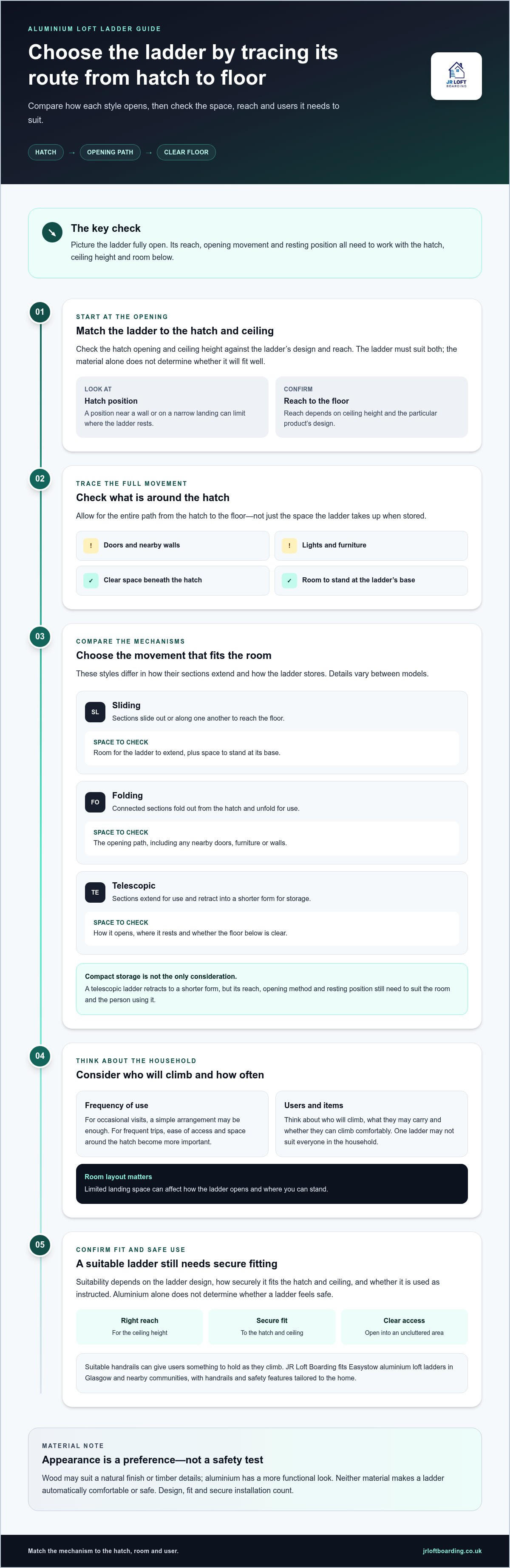
The mechanism affects how a ladder comes down, how it stores and how much room it needs. An aluminium loft ladder should suit both the hatch and the space beneath it. The names describe broad designs, though details differ between models. Use this comparison as a starting point, then consider how a specific ladder will work in your home.
| Style | How it generally works | Room detail to consider |
|---|---|---|
| Sliding | Sections slide out or along one another to reach the floor. | Allow room for the ladder to extend and for you to stand at its base. |
| Folding | Sections fold out from the hatch and unfold for use. | Check the opening path and any nearby doors, furniture or walls. |
| Telescopic | Sections extend for use and retract into a shorter form for storage. | Check how it opens, where it rests and whether there’s clear space below. |
The main difference is how each design extends from the hatch and folds, slides or retracts for storage. The ladder’s reach depends on the ceiling height and the product’s design. Hatch position matters as well. An opening near a wall or in a narrow landing can limit where the ladder rests. Look at the full area beneath the hatch, including doors, light fittings and furniture that could obstruct the ladder’s movement.
How do sliding and folding loft ladders differ?
A sliding design opens by drawing its sections out, while a folding design opens by unfolding connected sections. Both need clear space beneath the hatch, but the movement and final position vary by model. A hatch above a clear hallway may allow more room than one above a cupboard or near a door. Consider the ladder’s full path from the hatch to the floor, not only the space it occupies when stored.
When might a telescopic loft ladder suit a home?
A telescopic design retracts into a shorter form when stored, which may suit a household wanting to keep access equipment compact. That doesn’t make it suitable for every hatch. Its reach, opening method and resting position still need to work in the room. Ease of operation depends on the particular model and the person using it, so consider whether its movement will be manageable for your household.
Before choosing, picture the ladder fully open. Is there clear floor space at its foot? Can it reach the floor without meeting a wall or another obstruction? These checks help narrow down the style, but the ladder still needs to match the ceiling height and hatch. JR Loft Boarding supplies and fits Easystow aluminium ladders, tailoring the fitting to ceiling heights and existing hatch openings. Handrails and safety features can be included to suit the home. For details, read about ladder fitting with JR Loft Boarding.
Are aluminium loft ladders safe and sturdy to use?
Aluminium alone doesn’t determine whether a ladder feels safe. The design, fit and way it’s used all play a part. Suitability depends on the ladder design, how securely it fits the hatch and ceiling, and whether it’s used as instructed. A ladder that’s the wrong size or awkwardly positioned can be difficult to use, whatever it’s made from.
Consider the whole access setup. The ladder should suit the ceiling height and hatch opening, open into a clear area and be secured as intended. Suitable handrails can give users something to hold as they climb. JR Loft Boarding can include handrails and safety features suited to the home when fitting Easystow aluminium loft ladders.
What affects a ladder’s stability and safe use?
Secure fitting matters. The ladder needs to connect properly with the hatch and sit in the position intended for its design. The opening must also allow it to operate without catching on nearby walls, doors or fittings. A fitting assessment takes account of the hatch, ceiling height and surrounding room, helping the access arrangement suit the space.
Before each use, follow the ladder’s own instructions and safety information. Don’t assume that every model works in the same way. Check that it’s opened and positioned as directed, and don’t climb if you notice damage or anything loose or out of place. Handrails can help with balance, but they don’t replace careful climbing or a clear landing area.
- Clear the area below the hatch before opening the ladder.
- Use the ladder as its instructions describe.
- Stop if the ladder shifts, catches or doesn’t appear properly secured.
Is aluminium suitable for carrying boxes into the loft?
Think about what you plan to carry and how often you’ll use the loft. An occasional trip to put away a small item is different from regular visits with household belongings. Choose an access setup that suits the people using it and the trips they expect to make. Don’t assume that the ladder material alone tells you what a particular ladder can safely take.
Climbing while carrying something can make it harder to hold the ladder. Keep a steady grip and avoid carrying items in a way that blocks your view or stops you using the handholds provided. If an item is awkward to manage on the ladder, take it up separately with help rather than climbing with your hands full. For frequent storage trips, consider how the ladder’s position, handrails and landing space will work in everyday use.
How to choose an aluminium loft ladder for your home
A suitable ladder needs to work with your loft hatch and the room below, as well as with the people who’ll use it. Before choosing, note how you use the loft and what space is available. This gives you a clearer picture of the access your home needs.
- Loft-use frequency: Decide whether you’ll visit for seasonal storage or make regular trips.
- Hatch: Note its position and measure the opening.
- Ceiling height: Measure from the floor to the ceiling around the hatch.
- Room clearance: Look for doors, furniture, lights or walls that could affect the ladder’s movement.
- User needs: Think about who will climb and whether handrails would be helpful.
What should you measure before choosing a loft ladder?
Start with the hatch opening. Record its width and length, and note whether it sits close to a wall or another obstruction. Then measure from the floor to the ceiling near the opening. These details help assess whether a ladder can reach the floor and operate in the available space. Don’t rely on the room’s general height if the floor or ceiling is uneven.
Look down as well as up. A door that swings beneath the hatch, a tall cupboard or a pendant light may affect where a ladder can open or rest. Note anything that could get in the way, and consider where you’d stand when climbing. Measurements are a useful starting point, but a fitting assessment can take in the full access arrangement, including how the ladder and hatch work together. JR Loft Boarding tailors fitting to ceiling heights and existing hatch openings.
How often will you use the loft?
If the loft is mainly for seasonal items, you may only need access now and then. Taking down decorations once a year creates a different routine from regularly fetching stored bedding or household supplies. Think about the trips you actually make, rather than assuming loft use will be occasional.
Consider who will use the ladder, whether they’ll carry items and how comfortable they feel climbing. Handrails may provide support and can be included in the fitted setup to suit the home. If you plan to store more, think about how ladder access will work alongside the storage area. Our raised loft boarding guide for Glasgow homeowners explains how raised boarding can make use of loft storage space.
With the hatch and room details in hand, you can make a more informed choice. JR Loft Boarding supplies and fits Easystow aluminium loft ladders to suit the home’s access. Find out more about aluminium loft ladder fitting.
What to expect from aluminium loft ladder fitting in Glasgow
A well-planned fitting starts with the access you already have. The hatch position, opening and ceiling height help determine how a ladder can be fitted and used. JR Loft Boarding supplies and professionally fits Easystow aluminium loft ladders, tailoring the arrangement to the ceiling height and existing hatch opening.
How is an aluminium loft ladder fitted?
The first step is to assess the hatch and room below. The installer considers the opening, ceiling height and space available for the ladder to open and rest. Nearby walls, doors or fittings can affect access, so the surrounding area matters too.
The ladder is then positioned to suit the opening and its intended use, and secured in line with the ladder’s requirements. Fitting details depend on the product and the home, so don’t assume every ladder is attached or operated in the same way.
A good match between hatch and ladder makes everyday access more practical. If the opening or ceiling height doesn’t suit the chosen arrangement, the ladder may be awkward to position or use. Fitting can also include handrails and safety features suited to the home. These additions form part of the overall access setup, rather than making up for a ladder that doesn’t fit properly.
When is professional fitting helpful?
Professional fitting is useful when you want the ladder matched to the actual hatch and ceiling height, rather than choosing on appearance alone. It brings the opening, ladder position and available room clearance into one assessment. This is especially relevant if the hatch is near a wall or the space below is limited.
JR Loft Boarding supplies and fits Easystow aluminium loft ladders to suit existing hatch openings and ceiling heights. The fitting can include handrails and safety features suited to the home’s access needs. This considers how the ladder will work as part of your loft access before it is secured.
JR Loft Boarding serves Glasgow, Airdrie, Motherwell, Paisley, Hamilton, Bishopbriggs, Newton Mearns, East Kilbride and Cambuslang. If you’re considering an aluminium loft ladder, share your hatch and ceiling details with us to discuss a suitable fitted arrangement.
Read about Easystow ladder fitting with JR Loft Boarding.
Make loft access work for your next step
Choosing an aluminium loft ladder is a chance to make loft access part of a more useful home routine. Think beyond getting through the hatch: consider how you’ll organise the space once access is easier and what you want to store there. Planning the access and storage together can help both work well in everyday use.
JR Loft Boarding supplies and professionally fits Easystow aluminium loft ladders. Fitting can include handrails and safety features suited to your ceiling height and hatch opening, making access a considered part of your home.
To plan practical loft access, contact JR Loft Boarding about Easystow aluminium loft ladder fitting.
Frequently Asked Questions
Is an aluminium loft ladder strong enough for regular use?
An aluminium loft ladder can suit regular use if the specific ladder is designed for that purpose and fitted correctly. Follow the maker’s instructions and don’t judge suitability by material alone. Think about how often you’ll climb, who will use the ladder and what they’ll carry. If your household visits the loft often, a well-planned access arrangement matters more than choosing a ladder based only on its material.
Are aluminium loft ladders better than wooden loft ladders?
Neither material is automatically better for every home. Aluminium has a practical, functional appearance, while wood may suit someone who prefers a natural finish. Compare the specific ladder’s design, operation and care instructions, as these can vary. Your hatch, available room and the people using the ladder matter too. A timber ladder that suits one landing may be less practical in another, just as an aluminium model may not suit every household’s preferences.
Can an aluminium loft ladder fit an existing loft hatch?
Yes, an aluminium loft ladder can be fitted to an existing hatch when the opening and surrounding access suit the ladder. The hatch’s dimensions and position are part of the assessment. If the opening needs to be enlarged or adjusted, that affects the work involved. JR Loft Boarding supplies and fits Easystow aluminium loft ladders, tailoring the fitting to existing hatch openings in homes around Glasgow.
How do I measure for an aluminium loft ladder?
Record the hatch opening’s length and width, then measure from the floor to the ceiling beside it. Note where the hatch sits in the room and what is beneath it, such as a door, wardrobe or light fitting. These details help describe the space, but measurements alone don’t confirm a suitable fit. Avoid leaning or climbing to reach the opening; a professional can assess the full access arrangement safely.
Are sliding or folding aluminium loft ladders easier to use?
Neither style is always easier. A sliding ladder moves out by extending its sections, while a folding design unfolds from the hatch. The best fit depends on the model, available space and person operating it. For example, a door close to the hatch may restrict how a ladder opens. Consider the movement needed to open and put it away, not just how it looks when stored.
Can a loft ladder be fitted if my ceiling is unusually high?
It may be possible to fit a ladder for a higher ceiling, but the ladder and access arrangement need to suit the measured height. Hatch position and the room below affect the choice too. JR Loft Boarding tailors Easystow ladder fitting to ceiling heights and existing hatch openings. The fitting assessment considers the practical arrangement, including whether handrails or other safety features should be part of the installation.
Is professional fitting needed for an aluminium loft ladder?
Professional fitting is a sensible option if you’re unsure how the ladder will match the hatch, ceiling height and room layout. It brings those details together and ensures the ladder is secured as intended. JR Loft Boarding supplies and professionally fits Easystow aluminium loft ladders in Glasgow and nearby areas, including Airdrie, Motherwell and East Kilbride. This is particularly useful where the hatch or ceiling makes access less straightforward.


