
Could your loft make room for the things you need to store without squashing its insulation or making access awkward? With loft boarding Hamilton homeowners can plan around the shape of the loft, the space available and how they’ll use it day to day.
It’s sensible to think about more than the boards. A layout that works for your home may include raised flooring to help protect insulation, along with a suitable loft ladder, hatch or lighting. I’m John, and I take a practical, tailored approach to each project rather than relying on a one-size-fits-all setup.
This guide explains what to consider before boarding, how access and insulation fit into the plan, and which additions could make storage easier to use. You’ll also get a clearer idea of how a loft project can move from assessing your space to choosing and installing a suitable setup in Hamilton. The aim is to help you make a straightforward choice that keeps your loft useful and accessible.
Key Takeaways
- List what you want to store and how often you’ll need it to shape a useful loft layout.
- With loft boarding Hamilton, the right flooring approach depends on your loft’s layout and the insulation beneath it.
- Decide whether boarding alone will suit your needs or whether access, insulation or lighting should be part of the project.
- A clear plan, from describing how you’ll use the space to agreeing the work, helps keep the project straightforward.
- JR Loft Boarding is a family-run business operated by John, providing raised flooring and practical additions tailored to your loft.
Loft Boarding in Hamilton: Start With Your Storage Needs
A tidier home often starts with a clear idea of what needs putting away. Before planning loft boarding Hamilton, make a short list of the belongings you want to store and how often you’ll need to reach them. This gives the project a practical starting point, rather than treating the whole loft as empty storage space.
Think about access as well as capacity. Boxes you use once a year can sit further from the hatch, whilst items you fetch regularly need a more convenient place. A useful plan also leaves room to move through the loft and takes account of the hatch, roof shape, joists and insulation.
What do you want to store in your Hamilton loft?
Seasonal decorations, suitcases and belongings you rarely use are common items to consider. Note anything bulky or awkwardly shaped, as it may need a clear route through the hatch and a suitable place to sit. Grouping belongings by how often you use them, as well as by size, can help you decide where they should go.
Keep the plan realistic. Sloping roof edges, stored household equipment and the position of the hatch can limit where flooring is useful. Leave out areas that would be difficult to reach, and prioritise a practical storage zone over trying to board every available space.
What should you assess before planning loft boarding?
Start with what you can see safely: the hatch’s position and size, how you currently reach the loft, and the shape of the space beyond it. Note any obstructions and whether the existing access makes it awkward to carry items up. These details help shape a layout that suits the way you’ll use the loft.
Look at the insulation before deciding on a floor system. Its type and position affect how boarding should be planned, since insulation should not simply be squashed beneath flooring. The Building insulation materials overview explains common insulation types and how they help reduce heat transfer.
If you have a new-build home, review your own warranty terms before arranging alterations. Requirements can depend on the terms that apply to your property, so don’t assume that every boarding arrangement has the same effect on cover.
The right loft project starts with your storage needs, how you’ll access the space and the conditions already in your loft. A clear list of belongings and a simple assessment of the hatch, layout and insulation help bring those points together before you settle on the work.
Choose Loft Boarding That Works With Insulation and Loft Layout
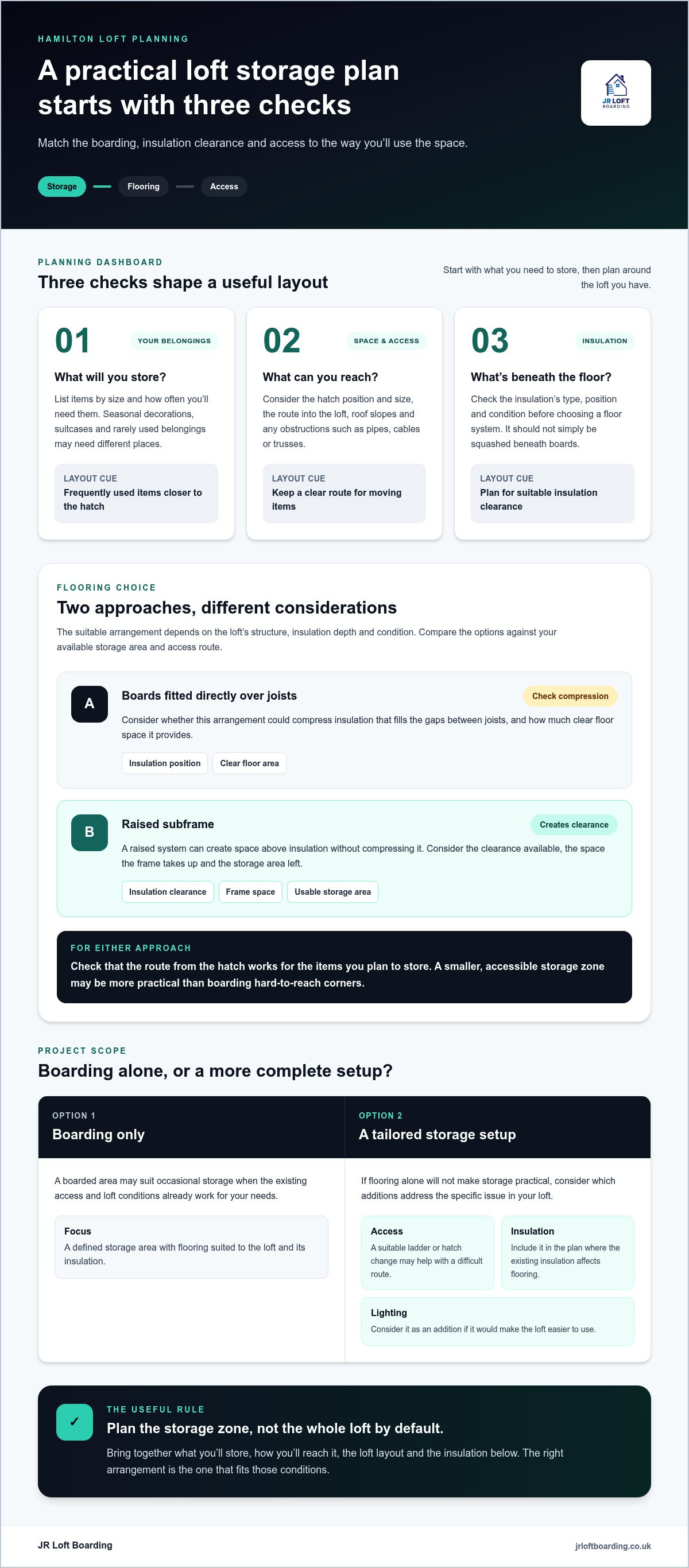
The floor system needs to suit both the insulation already in place and the shape of your loft. Boards fitted directly over joists may press down on insulation that fills the gaps between them. A raised subframe can create clearance above the insulation, but the suitable arrangement depends on the loft’s structure, insulation depth and condition.
How does insulation affect a loft boarding plan?
Insulation helps slow heat escaping through the roof. Compressing it beneath boards can reduce the space it occupies and affect how well it performs. Raised flooring is designed to create storage without compressing insulation, though the available clearance depends on what’s already in the loft. Looking at the existing material and joists helps establish a suitable approach.
Use this simple comparison to organise the questions for your project:
- Floor fitted directly over joists: Consider whether the insulation will be compressed and how much clear floor space the arrangement provides.
- Raised subframe: Consider the clearance it can create above insulation, alongside the space the frame takes up and the storage area it leaves.
- Either approach: Think about the route from the hatch and whether you can reach the items you plan to store.
This is a starting point, not a universal answer. Loft conditions vary, so a system that suits one home may not suit another. The raised loft boarding guide for Glasgow homeowners explains the raised system in more detail.
Which parts of the loft can become practical storage space?
Look beyond the visible floor area. Roof slopes can make the edges difficult to use, while trusses, pipes, cables or other services may affect where boards can go. The hatch position matters too. A storage area is only useful if you can reach it and move items through the opening without awkward handling.
Plan for a clear route and the items you intend to keep, rather than assuming every part of the loft should be boarded. A smaller, accessible storage area may work better than boards extending into hard-to-reach corners. Keep the intended use in mind as the layout takes shape.
For a tailored loft boarding Hamilton plan, compare the likely storage area with insulation clearance and access needs. JR Loft Boarding installs raised flooring designed to create storage without compressing insulation. Discuss your loft boarding project with JR Loft Boarding.
Compare a Boarding-Only Job With a Complete Loft Storage Setup
Some households need a boarded area for occasional storage and little else. Others find that flooring alone won’t solve the main problem, particularly if the hatch is awkward to use, insulation needs attention or the loft is hard to see in. A useful scope includes the work that makes storage practical for your home, not every possible extra.
For loft boarding Hamilton homeowners, it helps to separate the essentials from additions that depend on how the space will be used:
- Boarding: Creates a defined storage area. The floor system should suit the loft and its insulation.
- Access: A ladder or hatch change may help if the current opening or route makes it difficult to reach the boarded area.
- Insulation: An upgrade may be relevant if the existing insulation needs attention as part of the project.
- Accessories: Lighting, shelving or a protective balustrade can be useful where they answer a specific need.
This isn’t a fixed package. The scope depends on the loft’s condition, layout and the work you choose. Think about what would make a noticeable difference to your household, then leave out additions you’re unlikely to use.
When might a loft ladder or hatch upgrade help?
Access deserves attention if the hatch is difficult to open, awkwardly placed or restrictive when you’re carrying stored items. The opening and route into the loft affect how conveniently you can reach the storage area. A suitable ladder needs to match the ceiling height and access arrangement, rather than being chosen separately from the space it serves.
For a closer look at the options, this loft ladder installation buying guide explains points to consider when planning access.
Which loft accessories are useful for everyday storage?
Lighting can make it easier to see stored belongings, particularly if the loft has little natural light. Shelving may help keep smaller items organised and easier to find. A protective balustrade can be considered where the planned layout leaves an exposed edge that needs guarding. Each addition should relate to the way you’ll use the boarded space.
Try a simple test: would this feature improve access, visibility or organisation for something you regularly store? If not, it may not need to be part of the job. A household storing a few seasonal boxes may have different priorities from one that needs to reach belongings often.
Once you’ve decided what matters, boarding, access and useful additions can be planned together as one project. I’m John, and I tailor loft storage work to the home and its intended use. If you’re weighing up a boarding-only job against a broader setup, you can discuss your loft storage plans with JR Loft Boarding.
Plan Your Hamilton Loft Boarding Project Step by Step
A clear plan helps turn a general storage idea into work that suits your home. For loft boarding Hamilton homeowners should define what they need, understand the loft’s existing conditions and agree the work before installation. Notes about the hatch, access and insulation help make those decisions more straightforward.
- Define what you’ll store. Write down the items you want to put away and how often you’ll need to reach them. This helps set useful priorities for the finished space.
- Assess the loft. Consider the hatch, existing ladder, visible insulation, roof shape and any obstacles. Photographs can help show the layout, and a property visit can clarify the details.
- Agree the scope. Set out whether the project involves boarding alone or also includes work such as insulation, access or lighting. The agreed scope should reflect the loft and how you plan to use it.
- Prepare for installation. Clear the area around the hatch and arrange straightforward access. Agree how existing loft contents will be handled before work begins.
What information helps shape a useful loft boarding plan?
Keep a short set of project notes. Include your storage goals, how frequently you use the loft, the hatch position and the type of access you have now. Add what you can see of the insulation and any features that may affect the layout, such as roof slopes or services. These details help shape a plan around the property rather than a standard layout.
If you’re unsure how to describe the space, a few clear photographs can show the hatch and visible loft arrangement. A visit can also help clarify the project requirements.
How can you prepare for installation day?
Make the route to the hatch clear and move belongings away from the access area. Before work starts, agree what will happen to anything already stored in the loft. Don’t assume existing contents will be moved as part of the boarding work; settling this in advance helps avoid confusion on the day.
The work plan depends on the property and the agreed scope. A boarding-only project differs from one that also includes changes to access or insulation, so timing depends on what the job involves. I’ll talk through the planned work with you so you know what has been agreed.
A clear scope makes it easier to plan the installation around your loft, your access and the work you’ve chosen. If you’re ready to discuss your Hamilton project, talk with JR Loft Boarding about your loft plan.
Get Loft Boarding in Hamilton From JR Loft Boarding
JR Loft Boarding is a family-run business operated by me, John. I work with homeowners in Hamilton to plan practical loft storage. Each home has its own layout, insulation and access, so the useful first step is to understand what you want the space to do. If you’re looking into loft boarding Hamilton, I can talk through your storage plans and shape a suitable scope of work.
I take a considered approach, with clear communication about the work agreed for your home. Boarding, access and useful additions can be planned together where they suit the property. Careful preparation and tidy workmanship matter too, so the project fits the loft rather than forcing it into a standard package.
What can JR Loft Boarding include in a Hamilton project?
A project can centre on raised loft flooring, designed to create storage without compressing insulation. Other work can be included alongside it to suit the loft and how you plan to use it. The aim is to put together a practical setup, not add features by default.
- Raised loft flooring for a defined storage area.
- Insulation upgrades as part of the project.
- Easystow aluminium loft ladders and loft hatches to support access.
- Accessories such as lighting or shelving to suit the planned use.
The right combination depends on your property and requirements. A straightforward storage area may call for a different scope from a loft where access or visibility also needs attention. We can discuss those details before settling on the work.
What happens when you enquire about loft boarding?
Start by describing what you hope to store and how often you need to reach it. It’s also useful to mention the hatch position, existing ladder, visible insulation and any access concerns. These details help me understand what matters to you and what the loft may need.
From there, we can discuss a suitable scope for your home. The agreed work will reflect the loft’s layout and the options you choose, rather than a fixed list of extras. I’ll explain the planned work clearly so you know what the project includes.
As a family-run local business, I take personal responsibility for planning and carrying out the work with care. A well-considered result starts with listening to your priorities, then matching the flooring and any useful additions to the space. The aim is orderly, accessible storage that makes sense for your household.
JR Loft Boarding serves homeowners in Hamilton and nearby areas including Glasgow, Airdrie, Motherwell, Paisley, Bishopbriggs, Newton Mearns, East Kilbride and Cambuslang.
If you’re ready to talk through your loft, its access and your storage needs, talk to JR Loft Boarding about your Hamilton loft. I’ll be glad to discuss a suitable project scope with you.
Take the Next Step Towards Useful Loft Storage
A good starting point is a short note about what you’d like your loft to hold and what currently makes the space difficult to use. That gives the project a clear purpose before you decide how much work to include. You don’t need every detail worked out in advance. A practical conversation can help turn your priorities into a plan that fits your home.
For loft boarding Hamilton homeowners, choosing a suitable setup is less about filling every corner and more about making the space work for everyday life. Keep your intended use at the centre of the decisions, and let the loft’s conditions guide the final scope.
I’m John, and I’m happy to talk through your plans and the options for your loft. Talk to JR Loft Boarding about your Hamilton loft and take the first step towards storage that feels right for your home.
Frequently Asked Questions
Can I use my Hamilton loft for storage if it has roof trusses?
Possibly, but trusses affect where flooring and storage can be placed. Their arrangement may limit clear floor space and the route from the hatch. Don’t cut, move or alter truss members to make room. A suitable layout needs to account for the roof structure and the areas you can access, rather than assuming the whole loft can be boarded. Describe the trusses and intended storage when planning the work.
Do I need permission from my landlord before boarding a loft?
Yes, get your landlord’s permission before arranging work in a rented home. Boarding, changing a hatch or fitting a ladder can alter the property, so check your tenancy agreement and discuss the exact work with your landlord first. Written agreement can help everyone understand what has been approved. If you rent a flat, also clarify whether the loft is part of your rented home and whether you’re allowed to use it for storage.
Can I store heavy boxes on a boarded loft floor?
Don’t assume a boarded floor can take any weight. The safe load depends on the loft structure and the flooring arrangement, and no general limit applies to every home. Have the proposed area and intended loads considered as part of the project before storing heavy boxes. Keep heavier belongings off the boards until you understand what the space is suitable for, and avoid piling dense items into one small spot.
Will loft boarding affect ventilation in my home?
It can affect airflow in the loft if boarding or stored items cover existing vents or restrict intended air paths. Keep ventilation openings clear, and avoid packing belongings tightly against the roof. Raised flooring can leave space above insulation, but the right arrangement depends on the loft. Mention any vents or signs of condensation when planning the work so the layout can take them into account rather than blocking them accidentally.
Can a loft hatch be moved to make access easier?
Yes, a hatch can be relocated where the property layout allows. A different position may make the route to the storage area more convenient, but the new opening needs to work with the ceiling structure and ladder arrangement. Think about where you can safely stand when opening the hatch and bringing items through. Sharing those access concerns helps shape a practical position for the hatch and ladder.
Can loft boarding be added to a new-build home?
Yes, loft boarding can be planned for a new-build home, with the flooring and storage layout suited to the property. Before making changes, read the warranty terms for your home and follow any relevant guidance from your builder. Don’t assume boarding automatically preserves or affects warranty cover, as terms can differ. A loft boarding Hamilton project should take the home’s existing insulation and layout into account as well.
What should I move out of the loft before the work starts?
Clear belongings from the hatch area and the route to the planned work zone. Remove fragile or valuable items that could be disturbed, and set aside anything you’ll need while the loft is being worked on. Contents elsewhere may not need to be moved, depending on the agreed scope. Before installation, discuss how existing belongings will be handled so there’s a clear plan for the space being boarded.


