

The cheapest alternative to renting a storage unit may be space you already have at home: a shed, garage, crawl space or basement can work if it is dry and suitable for your belongings. Paperwork and other moisture-sensitive items need particular care, so compare the protection and access you can provide at home with the ongoing rent of an external unit.
The right option depends on what you need to store, how often you’ll need it and how long you’ll need the space. This guide compares self-storage with home storage, explains what to check in a shed, garage, crawl space or basement, and shows how decluttering can reduce the space required. Use these factors to weigh the preparation and upkeep of home storage against regular rental payments.
Key Takeaways
- Compare ongoing unit rent with the cost and upkeep of making space at home before choosing where to store belongings.
- Match the storage space to what you’re keeping: damp, pests and changing temperatures can put some items at risk.
- Declutter first and you may need less space, making it easier to choose a practical, affordable option.
- If your loft could provide useful storage, raised loft boarding and suitable access can help make the space more functional.
Comparing self-storage unit costs with home storage
Alternatives to renting a storage unit include using suitable space at home, sharing storage or paying to store items by the box. For some households, the simplest option is making better use of space they already have.
Self-storage units
Self-storage offers units in different sizes, including indoor units inside a facility. A 5×5 unit covers 25 square feet, a 5×10 covers 50 square feet, and a 10×10 covers 100 square feet. This helps match space to furniture or seasonal belongings. Renting gives temporary flexibility, but payments continue for as long as you keep the unit.
Home storage
A spare room, garage, shed, crawl space or basement can store belongings without a separate unit. This may cost less when the space is already suitable, but factor in preparation and upkeep. A rented garage or lock-up is worthwhile only if its rent and related costs compare favourably with self-storage. Consider how easy it is to reach your belongings, especially if you use them often.
Storage alternatives
Storage-by-the-box charges according to the boxes or items stored rather than for a fixed-size unit. Shared storage means splitting the rent of a larger unit with someone else. Some apartment complexes and gated communities also offer storage to tenants or members, sometimes at a lower rate than traditional self-storage. These options can suit a smaller load, but access arrangements vary.
| Option | Space and cost basis | Access and flexibility |
|---|---|---|
| Indoor self-storage | Fixed unit size; ongoing rent | Separate facility; choose unit size |
| Home storage | Existing space; preparation may add costs | At home; use available space |
| Storage by the box | Charged by boxes or items | Can suit smaller loads |
| Shared storage | Split a larger unit’s cost | Coordinate access with another person |
Choose by listing what you’ll store, how often you need access and how long you’ll need the space.
Using a shed, garage, crawl space or basement
If you rent your home or use a rented garage or shared area, follow the agreement covering that space and store belongings only where permitted. Keep shared routes clear, particularly in communal hallways and garages. The agreement determines where possessions can be kept, even when another spot would be more convenient.
A garage keeps tools, garden furniture and frequently used boxes close at hand. It may be more exposed to break-ins than a self-storage unit, so keep valuable items out of sight. Converting a garage can involve insulation, flooring, electrical work and potentially plumbing. It also takes away vehicle-parking space, which may not suit a household with limited off-street parking.
A rented garage or lock-up provides separate storage, but rent and access arrangements affect its value. It can be useful for furniture during a move, while belongings you need every day may be inconvenient to retrieve. Keep items off the floor where possible and group them so you can reach what you need without shifting everything.
Garden sheds can become damp or attract pests if they are not properly built and maintained. Check and prepare the space before storing belongings, and use waterproof boxes in a shed, crawl space or basement. A sturdy lock and suitable security system can help protect valuable items in a shed. Keep books, paperwork and fabric away from damp walls.
Check for moisture before putting boxes into storage, then label each container by its contents. Keep seasonal garden equipment together, for example, and place frequently used tools near the entrance. A loft can also provide home storage, but temperature changes, humidity, mice and moths may damage belongings over time. Choose a dry, accessible space for anything you plan to keep there.
Follow the agreement covering a rented home, garage or shared space, and store belongings only where permitted. Keep communal access clear, especially in shared hallways and garages.
Decluttering before choosing a storage solution
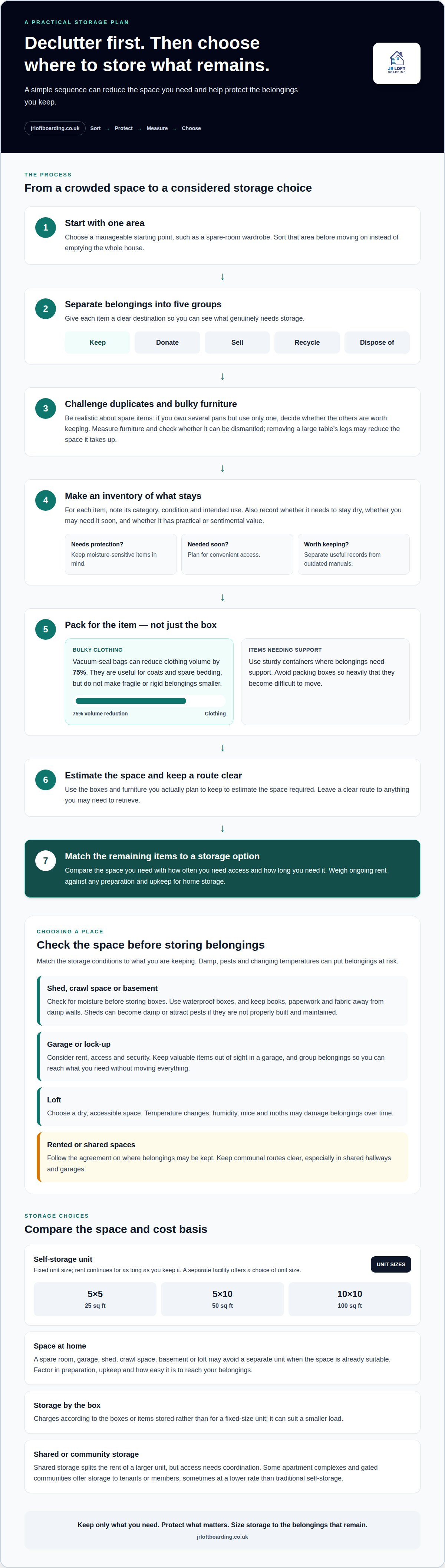
Sort your belongings before measuring a cupboard, loft or storage unit. Decluttering reduces the space you need and avoids paying to store items you no longer use. Start with one area, such as a spare-room wardrobe, instead of emptying the whole house. Make separate groups to keep, donate, sell, recycle or dispose of.
Be realistic about duplicates. If you have several spare pans but use only one, decide whether the others are worth storing. Measure furniture and note whether it can be dismantled. A large table may take up less space with its legs removed, while an unused chair may not be worth keeping.
Sort the remaining belongings by how often you need them. Keep important paperwork, seasonal clothing and frequently used equipment easy to reach. Put occasional-use items in clearly labelled containers. For example, pack winter coats together and label the container, rather than opening several boxes later to find one item.
Vacuum-seal bags can reduce clothing volume by 75%. They can help with bulky garments, such as coats and spare bedding, but they won’t make fragile or rigid belongings smaller. Use sturdy containers for items that need support, and avoid packing boxes so heavily that they become difficult to move.
Before choosing a solution, make a simple inventory that records each item’s category, condition and intended use. Note whether it needs to stay dry, whether you’ll need it soon, and whether it has practical or sentimental value. This helps identify what needs protected storage and what can leave the house. A box of old paperwork, for instance, may contain records worth keeping, while outdated manuals may be ready for recycling.
Estimate the space you need using the boxes and furniture you plan to keep. Leave a clear route to anything you may need to retrieve. This makes home storage easier to use and helps avoid paying for space you don’t need at a storage facility.
Long-term cost comparisons
For storage lasting six months or more, compare the full-term rent with the cost of preparing space at home. Add the monthly payments for the whole period, then include transport and setup costs. A facility can suit a temporary need, but ongoing rent adds up if you rarely retrieve your belongings.
Decluttering can change the calculation before you choose a storage solution. Selling usable furniture may bring in money, while donating unwanted items frees up space you might otherwise pay to store. If a spare table has gone unused for several seasons, for example, selling or donating it avoids keeping it in a rented unit or garage.
For a basic home-storage break-even comparison, divide the one-off preparation cost by the monthly unit rent. This gives the number of months it would take for home preparation to equal that rental spend. Compare the same storage period and include any ongoing upkeep. If you’re moving again after a short stay, a unit may avoid home improvements you won’t use later.
Sharing a larger unit with a friend can reduce each person’s share of the rent, but agree in advance how access and payments will work. Storage-by-the-box may suit a smaller volume because charges depend on the boxes or items stored, not a fixed unit size. Either option may be inconvenient if you need frequent access or expect your storage needs to change.
Before paying, list the items you’ll keep, how long you expect to store them, and how often you’ll need them. Then compare the full term’s rent with home preparation, upkeep and access. A loft may provide useful space for belongings you don’t need daily. If that suits your home, make loft storage more practical with suitable boarding and access.
Compare the rent for the full storage period with transport, setup, preparation and upkeep costs. Sharing a larger unit can reduce each person’s rent, so compare total costs over the same period.
JR Loft Boarding
JR Loft Boarding helps homeowners in Glasgow and Central Scotland make better use of loft space. Raised loft boarding creates storage within your home, with the raised floor installed above the insulation to preserve its intended depth. Easystow aluminium loft ladders and loft hatch upgrades can make access more practical, including in new builds. JR Loft Boarding also provides a free quote.
This option suits items that can be stored in a loft and don’t need frequent access. It won’t replace a unit for belongings that need a controlled environment or regular collection. For home storage that fits your needs, contact JR Loft Boarding.
Make your next storage choice work at home
Choose storage that suits your home and routine, not just the space available today. An alternative to renting a storage unit can work well when belongings are close at hand and the space is suitable for them. Consider how you’ll use the area over time and whether you can reach what you need without disrupting the rest of your home.
A clear plan can turn unused loft space into part of your household storage setup. Keep items you rarely need separate from everyday essentials, and make sure access suits the belongings you plan to store. If you’re considering a more practical loft storage arrangement, contact JR Loft Boarding about loft storage. A straightforward conversation can help you take the next step towards a home that feels less crowded and works better for you.
Frequently Asked Questions
Can I store my archives or files?
Yes, archives and files can be stored at home if the space is dry and suitable for paper. Moisture and temperature changes can damage documents, so avoid damp sheds, basements and loft areas for important records. Sort files into labelled boxes by subject or date, and keep paperwork you may need soon easy to reach. For long-term storage, make an inventory so you can find a particular file without unpacking everything.
Can I store seasonal items like holiday decorations or garden furniture?
Yes, seasonal decorations and garden furniture can be stored at home or in a separate unit. Clean and dry outdoor furniture before putting it away, then cover it to limit dust. Pack decorations by occasion, wrapping fragile pieces separately in a sturdy container. Keep items you’ll need first near the front, such as garden chairs ahead of warmer weather, so you don’t have to move every box.
How do I know my items are safe?
Match the storage space to the items. Damp or pest-prone areas can damage belongings, and valuable items need secure surroundings. A self-storage facility may have gated access, cameras and alarms. At home, keep possessions out of sight, use sound locks and avoid placing boxes where leaks or pests could reach them. In an attic or loft, consider whether temperature changes and humidity are suitable for what you plan to store.
What are my options if I don't want to rent a whole unit?
Consider storage-by-the-box, shared storage or space offered through an apartment complex or gated community. Box services charge according to the items or boxes stored, rather than a fixed unit size. With shared storage, agree how you’ll arrange access before splitting the cost of a larger unit. These options can suit a smaller load, such as a few boxes of records or seasonal decorations.
Can I store belongings with a friend, family member or in a garage or loft safely?
Yes, if the space is dry, secure and suitable for the belongings. A friend’s garage or loft may not have environmental controls, and pests, dust or moisture could cause damage. Agree where the boxes will go and how you’ll retrieve them, then use sealed, clearly labelled containers. Keep valuable or delicate possessions away from damp, fluctuating temperatures and signs of mice or moths.
What home storage and space-saving options can replace a storage unit?
Declutter first, then consider cupboards, under-bed containers, a garage, shed, basement or loft. Vacuum-sealed bags can reduce the space clothing takes up, while shelving and labelled containers help organise smaller belongings. In Glasgow, Airdrie, Motherwell, Paisley, Hamilton, Bishopbriggs, Newton Mearns, East Kilbride and Cambuslang, raised loft boarding can make loft space more practical for storage. Keep frequently used items easy to reach.


